dermatologist

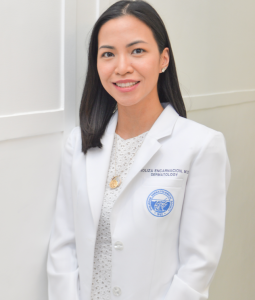
Dr. Niña Dionisio-Mejia

dr nina dionisio mejia

Niña Dionisio-Mejia, RN, MD, FPDS

Dr. Nina Dionisio-Mejia graduated with a Bachelor of Science degree in Nursing from the University of the East Ramon Magsaysay Memorial Medical Center and is a registered nurse. She obtained her medical degree from the Far Eastern University-Nicanor Reyes Medical Foundation Institute of Medicine. She has always been interested in the field of dermatology and eventually pursued residency training in the said specialty in the Rizal Medical Center Department of Dermatology belonging to its pioneer batch. She was the head resident of the Psoriasis Service Committee and was the first resident who was ever awarded Doctor of the Year by Psoriasis Philippines in recognition of her dedication and service for Psoriasis patients.

She is an associate member of the Philippine Society of Venereologists and currently undergoing the step ladder approach specialty program in pursuit to sub-specialize in Venereology (Sexually Transmitted Infections). She is also interested in seeking further training in procedural dermatology. She is the head of the community dermatology service unit of the Rizal Medical Center Department of Dermatology where is also an active consultant. Dr. Dionisio-Mejia is an associate member of the Philippine Academy of Dermatological Surgery Foundation Inc and a member of its committee on virtual communications. She is also a member on the committee on public safety and professional competency of the Philippine Dermatological Society.

Dr. Niña is a wife, a mama to a lovely little boy, and two dogs. She is a potterhead, loves breakfast, cakes, and binge-watching series.

Clinic Hours

Mandala Park, Mandaluyong

Friday | 12pm – 5pm

Dr. Niña Dionisio-Mejia Read More »

Dr. Iza Encarnacion

dr iza encarnacion

Iza Encarnacion, MD-MBA, FPDS

Dr. Iza Encarnacion graduated Bachelor of Science, Major in Health Sciences from the Ateneo de Manila University. She earned her double degree of Doctor of Medicine and Masters in Business Administration from Ateneo School of Medicine and Public Health. Early on, she had her mind on dermatology and had her Internship Elective from the University of the Philippines – Philippine General Hospital Department of Dermatology. She accomplished her Post Graduate Internship from The Medical City and Ospital ng Makati. She finished her Residency in Dermatology in East Avenue Medical Center. In 2019, she went to Mount Sinai Hospital in New York for Complex Medical Dermatology Fellowship.

She has extensive experience as a researcher and worked as a research project coordinator and investigator in various national and local programs. 

Dr. Iza is a consultant at East Avenue Medical Center (Medical dermatology and phototherapy) and Dr. Jose N. Rodriguez Memorial Hospital and Sanitarium (Phototherapy).

On other days, Dr. Iza takes part in their family owned handcrafted jewellery business. She loves to walk around malls and spend time with friends.

Clinic Hours

Mandala Park, Mandaluyong

Saturday | 9am – 1pm

Dr. Iza Encarnacion Read More »

Dr. Amy Chua

dr amy chua

Amy Cagayan – Chua, MD, FPDS

Our head dermatologist, Dr. Amy Chua is a graduate of the University of the Philippines – Philippine General Hospital Intarmed program (direct entry to medical school from highschool). She finished her 3 year residency training in UP-PGH. She is a topnotcher of the Philippine Dermatogical Society board exam. With over 12 years of private practice, Dr. Amy Chua has cultivated her own brand of health care which embraces the core values of personalized quality care, patient safety, treatment efficacy and cost-effectiveness.
 
Dr. Amy has completed the International Functional Medicine course in Applying Functional Medicine in Clinical Practice (AFMCP) in 2019. She is a member of the Philippine Dermatological Society PDS Functional and Integrative Dermatology Interest Group.
 
Dr. Amy is a mother to 3 lovely daughters and 1 adorable baby boy and has co-written a children’s book entitled, “Handwashing is No Big Deal.” You may order a copy of this book through Amazon

Clinic Hours

Mandala Park, Mandaluyong

Thursday | 10am – 7pm (Morning slots are strictly by appointment)
Saturday | 1pm – 7pm

Gateway Mall 2, Araneta City, QC

Monday | 11am – 6pm

Dr. Amy Chua Read More »

woman, age, in the free

Aging Skin Basics

Aging skin basics by Dr. Mary Amy Fatima Cagayan-Chua, FPDS. This article originally published in Health and Lifestyle magazine August 2019 issue. This is also published in their website.

Learn more about aging skin basics: factors affecting aging, changes in the laters of the skin, and basic skin care for the elderly.

Aging of the skin is a complex process characterized by the interplay of both intrinsic and extrinsic factors. Intrinsic, or natural skin aging, is largely determined by genetics – and is inevitable with the passage of time. Hormonal changes, such as those seen in postmenopausal women, also contribute to intrinsic aging.

Extrinsic, or external skin aging, is primarily caused by ultraviolet (UV) radiation (photoaging). As much as 80 percent of facial skin aging is due to photoaging. Photoaging is markedly observed in sun-exposed areas, such as the face, neck and hands. Photoaged skin is wrinkled, rough skin, with poor skin elasticity, with pigmentary changes and growth of benign and possibly malignant neoplasms. Other extrinsic factors include atmospheric pollution, lifestyle (smoking, sleep deprivation) and diet.

Aging of the skin occurs throughout the different layers of the skin.

Epidermis

In aged skin, flattening of the dermo-epidermal junction (DEJ) is observed. This leaves the epidermis with insufficient blood supply and nutrients, resulting in impaired thermo regulation and skin pallor. There is also a slower epidermal turnover, which contributes to the dull and rough appearance of the skin. The epidermal changes influence the delay in wound healing.

Dermis

As we age, the dermis undergoes about 20 percent decrease in thickness and has relatively fewer cells and blood vessels. Both intrinsic and extrinsic aging are characterized by increased expression of matrix metalloproteinases (MMP), enzymes which degrade collagen. Collagen production decreases at a rate of about 1 percent per year. Collagen bundles in the aged are thicker but more disorganized and fragmented, resulting in less structural support. Decreased collagen types IV and VII at the base of the wrinkles imply their role in wrinkle formation. Degenerative changes seen in elastin result in sagging skin with poor elasticity and resilience. There is also a decrease in glycosaminoglycans (GAG), particularly hyaluronic acid. The decrease in functional melanocytes causes decreased protection from harmful UV rays.

Subcutis

On a deeper level, there is atrophy of subcutaneous fat particularly in the face and back of the hands. This contributes significantly to sagging or the aged look.

All these changes in the skin predispose the elderly to skin disorders and not just aesthetic concerns. With the increasing life expectancy, there is now more focus on the aging skin disorders and skin care. The most common skin disorder in the geriatric population is senile xerosis. This is closely associated with pruritus, or itching.

Geriatric patients are also frequently diagnosed with skin tears and moisture associated skin damage (MASD). Skin tears are commonly found on the arms and are associated with trauma, such as bumping into furniture. MASD is linked to incontinence-associated dermatitis (perineal dermatitis), intertrigo, ostomy leakage, periwound skin, etc.

Skin care regimen

The most basic and important goal of skin care for the aging is to maintain the integrity of the skin barrier. These are the recommendations in literature.

1. Use gentle cleansers. It is best to use syndets (liquid) with neutral pH and preferably with an emollient.

2. Avoid further friction with use of scrubs, bath cloths, and loofahs. Instead, gently pat the skin dry using a towel.

3. Avoid hot and prolonged baths (i.e., more than 10-15 minutes).

4. Generally, bath oils are not recommended in the elderly due to an increased risk of accidents (may result in slippery floors, causing falls).

5. To relieve xerosis (drying of the skin), pruritus and prevent skin tears, use emollients containing humectants (moisture-retaining substances) and skin lipid replacement agents. Some ingredients to look for are ceramides (20-40 percent concentration), dimethicone, lactic acid (5 percent), urea (10 percent), glycerin and alpha-hydroxy acids (AHA). These improve hydration of the stratum corneum and enhance skin barrier function.

6. Some also advise avoiding perfumes and fragrances that can cause skin irritation.

7. For incontinence-associated dermatitis, a protective barrier cream is recommended. These are usually emulsion with a metal oxide (zinc or titanium), or siliconbased with dimethicone.

8. In the geriatric population, it is still important to protect the skin from UV radiation. Apply a generous amount of a broad-spectrum sunscreen in sun-exposed areas. Wear wide-brimmed hats and clothes with UV protection when outdoors. Often neglected areas include the ears, eyelids, and lips.

Lifestyle and the aging skin

The aging population is advised to increase intake of antioxidant-rich food and avoid a hyperglycemic diet. Attaining the recommended nutritional micronutrients is more challenging in the elderly due to their usually restricted diets and the loss of some of their ability to absorb nutrients.

Avoid smoking and exposure to secondhand smoke. Minimize exposure to pollution, if possible.

A good night’s sleep is important in maintaining healthy skin. A study has shown that elderly women who slept for less than 5 hours a day had compromised transepidermal water loss and skin barrier recovery after UV-induced erythema. Likewise, poor sleep quality results in disruption of the circadian rhythm, leading to cellular dysfunction and changes in various tissues, including the skin.

With the increase in life expectancy, we expect its related comorbidities including its effects on the skin. Having a thorough understanding of the causes of skin aging can help us manage the skin problems of our patients.

  • Bibliography:
  • Addor FAS. (2018). Beyond photoaging: additional factors involved in the process of skin aging. Clinical, Cosmetic and Investigational Dermatology, 20(11), 437–443. doi: 10.2147/CCID.S177448.
  • Baumann, L. (2009). Cosmetic Dermatology: Principles and Practice Second Edition. McGraw-Hill.
  • Humbert P, Dréno B, Krutmann J, Luger TA, Triller R, Meaume S, Seité S. (2016). Recommendations for managing cutaneous disorders associated with advancing age. Clinical Interventions in Aging. 12(11), 141-8. 10.2147/CIA.S96232.
  • Kottner J, Lichterfeld A, Blume-Peytavi U. (2013). British Journal of Dermatology.169(3), 528-42. doi: 10.1111/bjd.12469.
  • Ruxton, C. (2016). Tea: Hydration and other health benefits. Primary Health Care, 26(8), 34-42. doi:10.7748/phc.2016.e1162 Tobin DJ. (2017). Introduction to Skin Aging. Journal of Tissue Viability. 26(1), 37-46. doi: 10.1016/j.jtv.2016.03.002.

For your anti-aging skin concerns, you may book your appointment with our board-certified dermatologists and plastic surgeon, just follow the link.

Cheers to healthy skin!

Stay tuned for updates and promos, follow and like us on Facebook, Instagram and Twitter. For inquiries, CONTACT us here.

Aging Skin Basics Read More »

what’s up with parabens?

learn more about parabens and their health-associated risks

Parabens are a group of compounds used as preservatives primarily for their bactericidal and fungicidal properties.

They are found in shampoos, commercial moisturizers, shaving gels, make up, toothpaste, and other personal care products. They are also used in topical/parenteral pharmaceuticals and as food preservatives.

In the past years, there were health controversies raised with chronic and cumulative exposure to parabens.

A study by AF Fransway MD, et al published in DERMATITIS January/February 2019 issue summarized the existing medical and scientific evidence against parabens as below:

CONTACT DERMATITIS

Parabens have been shown to have low allergenic potential. Parabens are deemed relatively nonirritating at levels used in current formulations as studied by the North American Contact Dermatitis group.

ESTROGENIC EFFECTS

Animal experiments have shown that parabens have weak estrogenic activity, acting as xenoestrogens. There are no studies in humans confirming effects of paraben exposure.

CANCER

The American Cancer Society mentioned a 2004 study by Darbre which reported presence of parabens in the breast tissue of mastectomy patients, however study did not find parabens to be the cause of the cancers.

EU’s Scientific Committee on Consumer Safety reviewed scientific data and noted that parabens generally have low toxicity and do not cause cancers.

Studies have shown that absorbed parabens from topical application are rapidly hydrolyzed by hepatocytes and do not accumulate in human tissue to any significant degree.

Parabens have been implicated in the impairment of the reproductive system of male laboratory animals. However, antiandrogenic physiologic or developmental effect in human have not been documented whether via ingestion or percutaenous absorption of paraben.

FERTILITY

Studies on humans have not demonstrated effect of paraben on semen quality parameters or sperm DNA.

PERINATAL EXPOSURE

Maternal levels were studied and found no statistical difference with samples from their children at age 3-4years. Methylparaben, ethylparaben, and propylparaben esters have been identified in breast milk however there are lower than the allowable daily intake and deemed safe.

ENVIRONMENTAL ISSUES

Cosmetic ingredients are potential emerging pollutants. Methylparaben was identified as the predominate paraben in natural waterways in a study that took samples from China, Wales, Spain, Switzerland, India, In one study that took samples 39 swimming pools in Beijing, they found 20dols higher concentration of total parabens (predominantly metyhlparaben and propylparaben) in indoor pools versus outdoor pools. The authors however assessed human exposure to parabens from swimming pool as negligible compared to total exposure dose from other sources.

Parabens are not completely removed from wastewater in the treatment plants hence an accumulation in the environment is alarming. Although presently there are limited studies and information on the effect of parabens to aquatic organisms, in contrast to benzophenone (oxybenzone).

The authors have concluded that claims regarding parabens and potential adverse health effects are premature based on currently available scientific information. Removal of parabens from consumer products could result in substitution with an alternative substance which is less proven and potentially unsafe too.

This study was published by dermatologists in the US.

REGULATION

The EU Commission Regulation No 358/2014 has banned use of the following parabens: Isopropylparaben, isobutylparaben, phenylparaben, benzylparaben and pentylparaben.

The following parabens are safe and repeatedly confirmed by the EU Scientific Committee on Consumer Safety (SCCS):

Methylparaben and ethylparaben are safe at maximum authorized concentrations (maximum of 0.4% for one ester, or 0.8% if in combination). Butylparaben and propylparaben are safe with maximum individual concentration of 0.19%. Butylparaben and propylparaben are prohibited in products designed for children under three years old and must have warning not to be used in the diaper area.

We hope this review clears the controversies associated with parabens. Though some of it forms are banned and deemed unsafe, other forms are with minimal health risks with no significant scientific evidence to propose discontinuation of its use. We may also choose to limit paraben exposure and choose “healthier” alternatives. Such alternatives are available at AC Skin Health.

You may book your appointment with our board-certified dermatologists, just follow the link.

Cheers to healthy skin!

Stay tuned for updates and promos, follow and like us on Facebook, Instagram and Twitter. For inquiries, CONTACT us here.

what’s up with parabens? Read More »